


The article is broken into 4 parts:
-
The Current Swimwear Landscape
-
The Birth of Isla Santisima (my values and how they translate)
-
Typical Swim Fabric Choices (an explanation of what you'll find on the current swimwear market)
-
Choosing Amni Soul Eco® (a breakdown of everything that makes this special fabric the golden standard of swimwear)
To get a clear picture on why Amni Soul Eco® is such a significant choice, it helps to first understand the current swimwear landscape and the popular material choices/practices it’s built on. So we start the article with the swimwear industry as we know it today.
The Current Swimwear Landscape
Today’s swim market is saturated with options. New styles, prints, and micro-trends are constantly emerging, making it easier than ever to find something that feels expressive and like YOU. From a fashion standpoint, this accessibility has reshaped how we shop for swim: encouraging variety, spontaneity, and frequent updates to our wardrobes. It is an unprecedented approach to clothing garments that didn't exist even 100 years ago.
Most swimwear is constructed from a relatively narrow range of materials. The industry standard relies heavily on synthetic fibers such as nylons and polyesters, typically blended with elastane to create stretch and shape retention. These fabrics are favored for their durability, smooth finish, and ability to hold structure in water.
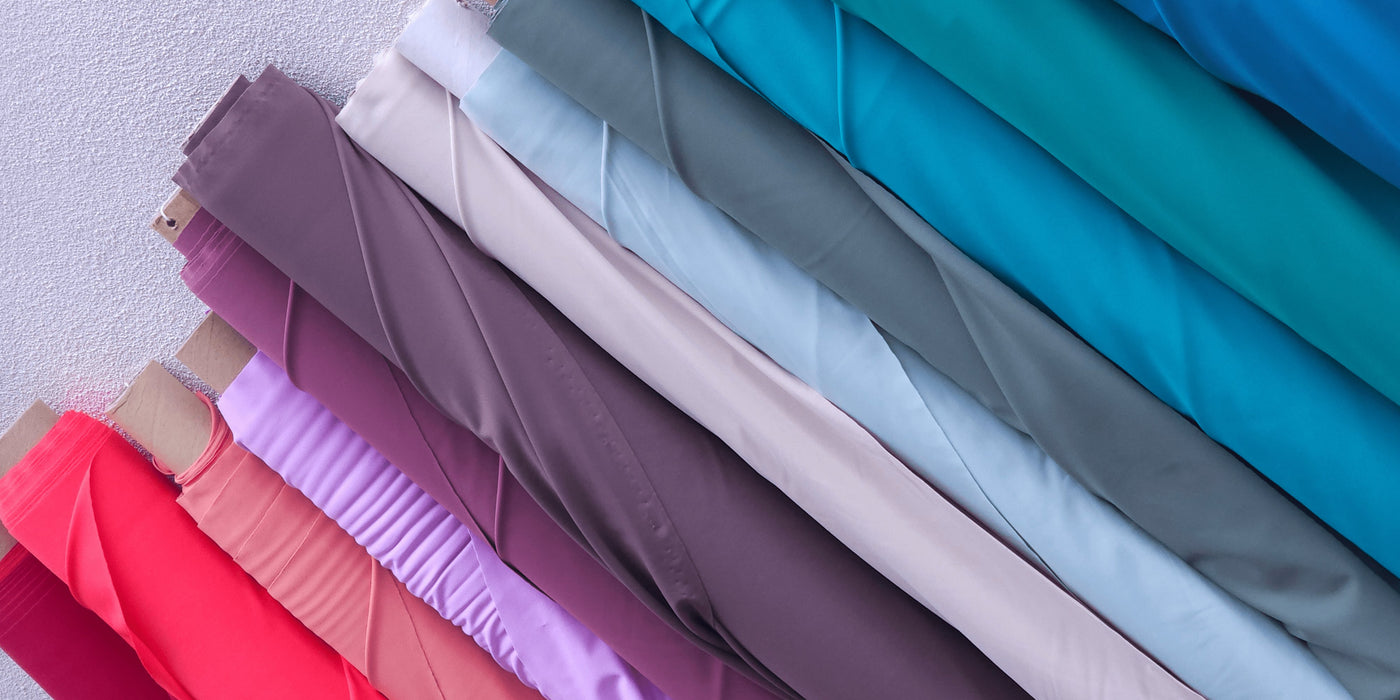
These materials have defined swimwear for decades. They were not originally developed with long-term environmental impact in mind, nor could anyone have forecast the ways in which these materials would be produced at massive scales (paired with short trend cycles). These materials were designed for performance and cost-efficiency at scale. Fortunately for some and unfortunately for most, these are qualities that support rapid production cycles and widespread availability.
As a result, the lifecycle of many swim pieces has become drastically shorter. With new styles constantly entering the market, swimwear is often treated as something seasonal or temporary—worn for a period of time, then replaced.
This system has created a category that prioritizes speed, trend turnover, and visual appeal, while material innovation has remained relatively stagnant.
That’s the current standard. And it’s where the opportunity for something different begins.
The birth of Isla Santisima

The decision to use Amni Soul Eco® didn’t begin with fabric—it began with a set of values. These values have fundamentally shaped the decisions I've made, which have trickled down into the business decision I make today.
Growing up in Southern California, living in swimwear was a way of life. Over time, my attention naturally gravitated toward a few things: health and wellness, environmental impact, and human rights. Not as abstract ideas, but as everyday considerations: what I consume, what my purchases support, and what I put on my body.
As those values became more defined, so did the gaps. Painfully so might I add.
I found myself searching for brands that aligned with a higher standard that I help myself to. Ones that were transparent about their materials, thoughtful about production and labor usage, and intentional in design. What I found instead was often unclear. Messaging that suggested sustainability, but without depth or any substantiated evidence. Products that claimed Eco-mindedness, but either didn’t fully explain what that meant or was straight up greenwashing. I often found that most brands either made a half-attempt to position themselves favorably like that, and/or didn't address things like labor usage, fast fashion participation, or health impacts.
The few times at least one of those standards were met by a brand, they were often positioned at a price point that made them feel out of reach. I'm talking $150 per piece with just a recycled nylon to back the projected value. Yes, recycled nylon is a cool initiative and has helped push textile progress forward, but the full lifespan and impact of these pieces isn't included in an environmental or health cost that we pay.
Swimwear, in particular, felt stagnant.
It existed within the same trend-driven system, fast-moving, and rarely centered around the kinds of material or production decisions I was actively trying to make in other areas of my life. The more I paid attention, the more difficult it became to find something that felt fully aligned. I haven't bought new swimwear in the past few years because I couldn't justify the price-tags on basic pieces that didn't even reach all of my standards.
The idea for Isla Santisima emerged from that deep disconnect. Not as a reaction, but as a response, an opportunity to build something that didn’t require compromise. It was rooted deeply in the excitement of bringing something to life that meets my high standards, and doesn't feel like a compromise.
The intention has been very clear from the beginning: to create swimwear that reflects a more thoughtful standard. Pieces designed with care, made from materials chosen with purpose, and produced in a way that considers both people and impact.
Accessibility became just as important as intention. Because a higher standard only matters if it’s within reach. Some people may argue that my pricing isn't accessible, but I counter that with the value it grants you as a conscious consumer. Innovative materials, ethical labor, and sustainable production is as expensive as it sounds, but I'm not riding off into the sunset with massive profits. I've priced these pieces to be an aligned investment that helps me re-invest into taking up space in a market that values quick short term results using low grade materials. I've spent good money in the past on pieces that have been made of Carvico Vita or Repreve in the past, just to feel that it was only a fraction of the story. Not necessarily regret, rather a yearning to align better with brands I try to trust.
So let's break down these materials!
Typical Swim Fabric Choices
It’s important to understand what most swimwear is actually made from and why these materials have remained the standard for so long. I lightly touched on it earlier, but let's talk about it more in depth.
While designs and aesthetics continue to evolve, the foundation of most swim garments is built from just a few key fibers.
Nylon
Nylon (also known as polyamide) is one of the most widely used fibers in swimwear. It is valued for its smooth hand feel, lightweight nature, and ability to create a soft, second-skin finish.
In performance terms, nylon offers strong elasticity, resistance to abrasion, and the ability to maintain its structure even with frequent wear. It also dyes well, allowing for the saturated colors and prints often seen in swim collections.
Polyester
Polyester is another common fiber used in swimwear, often chosen for its durability and resistance to environmental exposure. Compared to nylon, it tends to offer higher resistance to chlorine, UV light, and fading over time.
It is slightly less soft to the touch, but highly stable, making it a reliable option for maintaining color integrity and structural consistency. This works particularly well in pieces designed for extended wear or frequent water exposure.
Elastane (Lycra / Spandex)
Elastane—commonly known as Lycra or spandex—is rarely used on its own, but plays a critical role in nearly all swim fabrics. Typically added in small percentages, it provides the stretch and recovery that allows garments to move with the body and return to their original shape.
This fiber is what enables swimwear to feel supportive, flexible, and close-fitting, without losing structure over time. Without elastane, modern swimwear would lack the adaptability and comfort expected today.
But this is where the Limitations Begin
The qualities that make these materials effective during wear are the same qualities that shape their behavior over time. These are synthetic fibers, derived from non-renewable resources, and engineered for durability. That durability means they do not readily break down once discarded. Instead, they persist—retaining their structure long after their intended use.
In response, many brands have introduced recycled versions of these same fibers, repurposing existing materials into new garments. While this reduces reliance on virgin inputs, it does not fundamentally change how the material behaves at the end of its lifecycle. When it comes to this exact approach, brands do not shy away from greenwashing with this claim when not all recycled fibers are created the same. Some recycled fibers are 100% recycled, while others are a blend and still require virgin materials.
Additionally, because swim fabrics are typically blends of multiple fibers, they can be difficult to separate and process for future reuse.
This creates a broader consideration: while the industry has optimized swimwear for performance and longevity in use, less attention has historically been given to what happens beyond that point.
Understanding this distinction is essential when evaluating what “better” materials in swimwear can look like.
Choosing Amni Soul Eco®

With a clear understanding of how traditional swim fabrics are constructed—and where their limitations lie—the question becomes: what would a more considered alternative look like? This is where Amni Soul Eco® enters the conversation.
Amni Soul Eco® is a type of polyamide 6.6 yarn, developed with a formulation that grants it an enhanced ability to break down under specific conditions. At its core, it performs like a traditional synthetic fiber—offering the same softness, stretch compatibility, and durability required for swimwear—but with a key distinction in how it behaves at the end of its lifecycle.
Unlike conventional polyamides, which are designed to persist indefinitely, this material is engineered to accelerate decomposition when exposed to an anaerobic environment such as the ocean or a landfill. This also addresses the micro-plastics that wash into the ocean!
How It Works
The differentiation lies in how the fiber interacts with microorganisms. In landfill conditions where oxygen is limited, certain microorganisms are naturally present but typically unable to break down conventional synthetic fibers. Amni Soul Eco® is formulated to make that process possible—allowing these microorganisms to access and digest the material more efficiently. Rather than remaining intact for centuries, the fiber is designed to decompose at an accelerated rate compared to traditional polyamide, returning to organic matter over time within those specific conditions.
The manufacturers have claimed biodegradation in 3-5 years, but third party testing has found over 90% decomposition in under five years... That's pretty spot on!
*It’s important to note that this process is not triggered during regular use. The fabric maintains its integrity while worn, washed, and exposed to typical environmental conditions. It will NOT start breaking down in your closet. The decomposition pathway is activated in environments where those specific microbial conditions exist.
Why it matters
This distinction directly addresses the imbalance present in conventional swimwear materials. Traditional synthetics are designed for longevity in use, but that longevity extends far beyond their intended lifecycle. By introducing a material that maintains performance while offering a more considered end-of-life outcome, the equation begins to shift. Instead of designing solely for durability, the material accounts for what happens after the garment is no longer worn.
Beyond its material structure and end-of-life behavior, Amni Soul Eco® is also supported by additional standards and production considerations that reinforce its role in more conscious textile development.
OEKO-TEX STANDARD 100 CLASS 1 Certification
Aside from an incredible formulation that encourages biodegradation, this fabric has also been 3rd party tested for 1000's of chemicals.
OEKO-TEX® Standard 100 is an independent testing and verification system that evaluates textiles for the presence of a wide range of regulated and non-regulated substances that may be harmful to human health. This includes criteria that are especially relevant for garments worn directly against the skin.
Class I certification is specifically designed for products intended for infants and young children, and therefore carries the strictest testing thresholds within the standard. While swimwear is not typically classified within this category, meeting this level of certification indicates that the material has been evaluated against the highest available safety benchmarks within the system.
This certification provides an additional layer of verification that the fiber has been tested for skin contact safety under rigorous criteria. I trust my skin to this standard.
CO₂-Controlled Production Process
In addition to certification standards, Amni Soul Eco® is produced using a CO₂-controlled manufacturing process. This refers to a production approach where carbon dioxide emissions are actively monitored and managed during manufacturing stages, with the goal of improving efficiency and reducing unnecessary environmental output where possible. While production processes in textiles are inherently resource-intensive, CO₂ control represents a more measured approach to industrial output—focusing on optimizing how resources are used rather than only the end material itself.
This is especially relevant in synthetic fiber production, where energy usage and emissions are key considerations throughout the supply chain. This process therefore further substantiates a sustainability throughout the production chain.
What I am NOT claiming
It’s important that I approach this with clarity and address limitations. Amni Soul Eco® is still a synthetic fiber, and its behavior depends on specific disposal conditions. It is not a universal solution, nor does it replace the need for broader changes in how garments are produced, worn, and discarded. What it represents is a huge step toward more intentional material design—one that acknowledges both performance and lifecycle as part of the same conversation. I consider this the golden standard for swimwear becuase of how it shifts us into a whole new category of thinking about what a swim fabric is, but there is still work to be done and innovation to keep being made across all of fashion.
The Choice
The decision to use Amni Soul Eco® came down to a personal alignment. It offered the performance required for swimwear, while introducing a level of material consideration that is often absent in the category! It supports the goal of creating pieces that feel good to wear in what they represent and how they directly impact us and the environment at large.